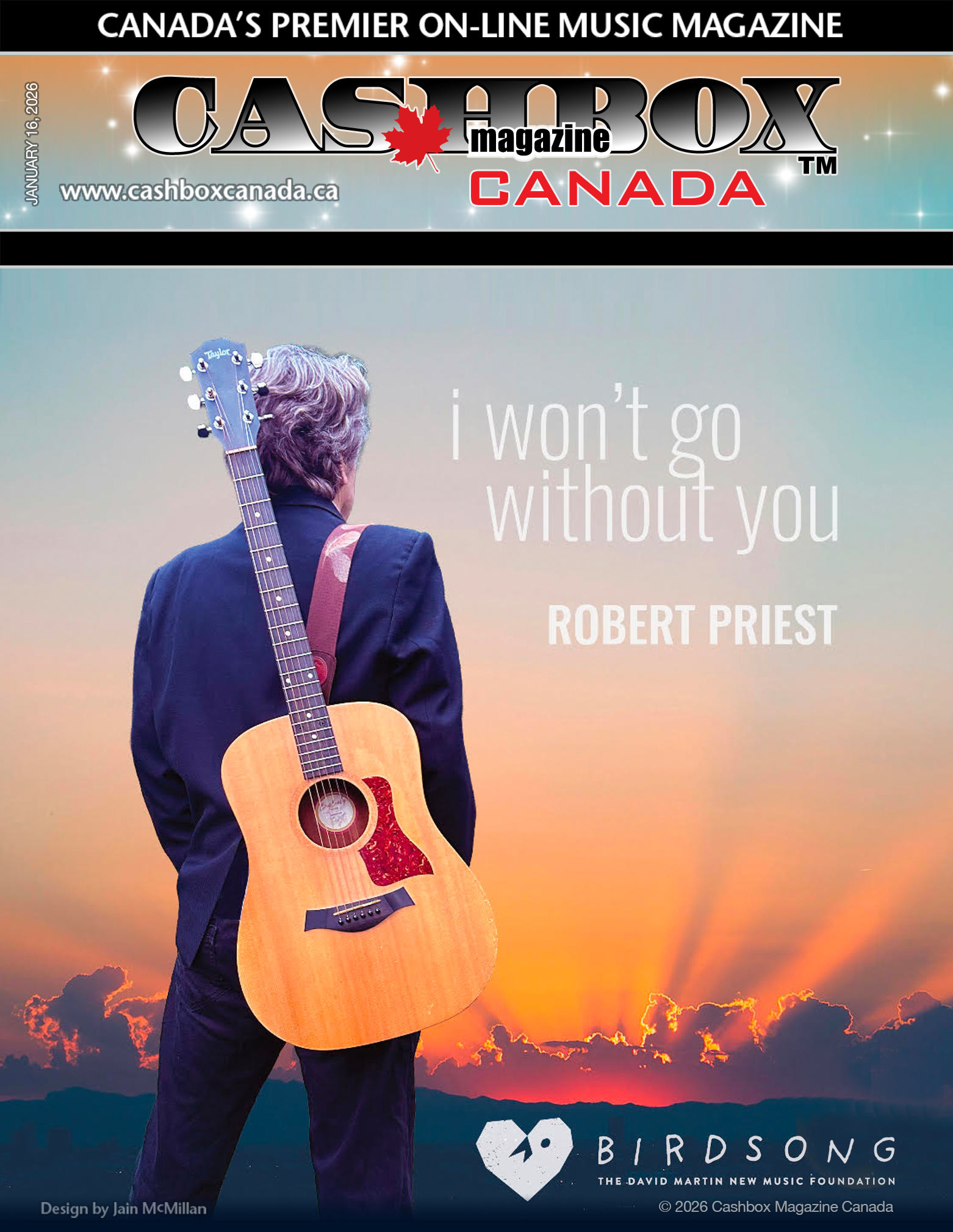
Creative and Graphic Designs for Robert Priest: Allen Booth
When speaking with poet and songwriter Robert Priest, you can’t help but think: wow — what a gentle, sweet, and interesting person, with an amazing head of hair. Over coffee, the kind words begin, the conversation shifts from light banter to the bizarre and the dark, and I sit back and listen — deeply intrigued by this poet’s mind as I jot down notes.
Often referred to as the People’s Poet, Priest’s body of work — fourteen books of poetry and eight CDs of music — beautifully captures the rainbow of emotions that comprise the human spirit. He has long had his share of admirers among the literati. Toronto Poet Laureate Lillian Allen, for instance, calls him “one of my favourite poets ever.”
“He is the people’s poet,” she says, “because he speaks to people about real-life situations and isn’t afraid to say what he feels. He is generous and has always supported other poets and artists, especially those who are breaking the rules.”
Earlier this year Handmaid’s Tale author Margaret Atwood was enthused enough to take to Twitter: “Robert Priest’s newest poem collection, If I Didn’t Love the River, from ECW Press, is worth it for the snappy, funny, spot-on ‘micro poems.’ Plus much more!”
Robert’s output as a singer-songwriter is just as varied and fulsome as his poetry, though it is not yet as widely known. That seems set to change with the release of his new single, I Won’t Go Without You. Recorded by platinum-award-winning producer Greg Kavanagh, this heartfelt and utopian song shows signs of finally getting CBC airplay and making its way to a national audience.
Priest speaks of his process with obvious delight. “When it’s all working, it’s like my mind is full of light and my brain is a crystal engine, with pistons and gears pumping out poems and songs,” he says. “I think of it as my ‘holy work’ — not because it has anything to do with religion; it just feels sacred, and I work by feel.”

“I used to think of my typewriter as a kind of magic wand. But these days, due to hand injuries, I dictate using voice-to-text. If you overheard me working, it would sound like a slow incantation from some kind of trance state. This condition requires freedom. I can't be bound societal duties or specific human causes but on the other hand we're in an emergency era and I want to be useful. So when I come up with songs like Simple Human Kindness or I Won’t Go Without You that seem to have a chance at stimulating human compassion, I’m particularly gratified.”
Listen on Spotify here: open.spotify.com/album/1KqtbVB8UJ70YlvHYGJmDK
“I take ownership of my work. I never think of it as channeling. For me, language is a kind of artificial intelligence — sounds, rhythms, meanings — all there for me to call up and stream. I start with a phrase, usually not knowing where it will go. From there, as the words come at me, I make a series of lightning decisions rooted in my aesthetic, which has a lot to do with sense and sound. It’s a solo voyage. I need to be alone so I can, in a sense, ‘dance like no one’s watching.’”
The so-called dark side is also important to Priest. “Poetry, including the poetry of song, can’t be all compassion and positivity. It’s necessary and healthy to give expression to the impolite realms. We can’t be complete without them. That’s why I write poems about things like that terrible outcast — the asshole. Such an object of disgust and scorn! But functionally, we’re disabled without it. It took billions of years of evolution to accomplish the simplicity and efficacy of this divine mechanism. I get a chuckle out of making points like that.”
“I believe songs and poems are necessary to the survival of humanity. Words and melodies can bind time and consciousness in an unlimited togetherness. It’s magical. Someone makes a song, sings it, and when it’s heard, it finds its way into another person’s brain and becomes part of them — something to be called on again and again. Maybe they sing it so someone else hears it and takes it on. Eventually, maybe a million people hear it, and it becomes part of them — a place to hold sacred ideas and keep them beautiful and entrancing. And all this can happen without ever being a material object like vinyl or tape. It can be transferred sonically and go on evolving in a million directions, in a million people, over a thousand years. Magic!”
Of course, Priest is speaking from an idealist stance. Today’s musicians need the material manifestation of their work, and that requires funding. Being blocked by that irreducible reality can be a significant factor in triggering mental illness in a songwriter. You need funding to record — and that’s where the Birdsong Foundation can be so helpful, providing grants sufficient to get songs recorded and released. Often, that alone can light a pathway out of darkness.
This is an area Priest knows all too well. Like many poets before him, he has experienced episodes of depression throughout his career. But the psychosis that overtook him in 2018 was of a different magnitude, resulting in a fourteen-month hospitalization. He credits electroconvulsive therapy (ECT), along with the love of his family, friends, and especially his partner, Marsha Kirzner, with bringing him back to life. Since then, eager to help dispel the stigma that too often accompanies mental illness, he has taken on the role of spokesperson for the Birdsong Foundation.
“I know for sure that, in my case, the Birdsong grant and Greg Kavanagh’s generosity in producing my new single, I Won’t Go Without You, were significant factors in restoring my spirit. The lyrics are very simple — not high literary poetry — but my co-writer, Allen Booth, supplied a beautiful melody to help slide it into as many minds as possible. I wrote it with my partner in mind. The lyrics are for her, but they’re also for those of us who don’t want to leave most of the world behind as we strive toward a better one. We want that lover, that friend, or the whole human race to come with us.”
Kavanagh first met Priest through the Birdsong Foundation and was immediately drawn to the Priest/Booth compositions.
“To me, great artists are defined by three chords and the truth — okay, maybe four chords. Robert has a gift for lyric and storytelling, and a raw, charismatic voice that works beautifully with his writing.”
I Won’t Go Without You.
(Priest/Booth)
They say there's a new land
in a time to come
of peace and plenty for
everyone
They say there's a new land
and I know it's true
I won't go without you x4
They say there’s a new land
where our spirits wake
There’ll be earth magic there
we can make
They say there's a new land
and I know it's true
I won't go without you x4
Last time I left you standing
But that was yesterday
This time we ride together all the way
All the way
I’ve seen the new land
The land of our birth
No fear or hunger
There’ll be peace on earth
I’ve seen the new land
I hope we get through
I won’t go without you
I won't go without you…
Jaymz Bee, a well-known promoter and singer, particularly in Toronto’s jazz scene, has also worked with Priest. Robert values clarity over cleverness; his compositions always have a point, especially lyrically. “Robert employs literary intelligence without stiffness, and his songs often sound like someone thinking out loud, mid-realization. He has an observational eye à la Randy Newman and a moral code à la Leonard Cohen.”
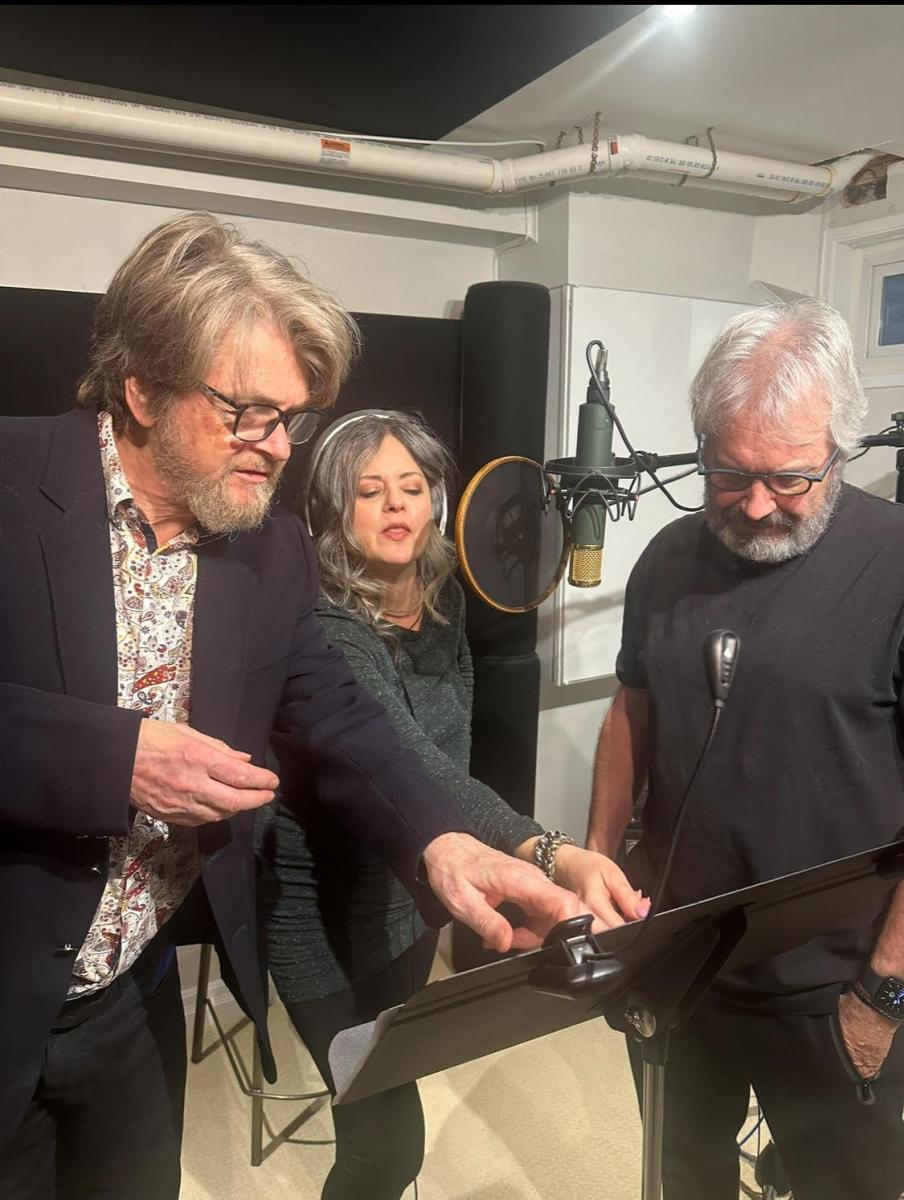
Early in his career, Priest was both lyricist and composer, but in recent years he has kept things fresh by collaborating with a small group of composers, including Ron Sexsmith, John Capek, Julian Taylor, and Allen Booth, who has written with him since the 1980s.
“He’s been called the People’s Poet because his work resonates with so many,” says Booth. “He’s also clearly a Romantic poet, with affinities to Wordsworth, Byron, and Blake. His themes are often personal, but when he engages politics, it’s from a working-class perspective. When I consider his output over the past fifty years, I think he’s arguably one of the best poets ever.”
For this writer, Robert is also a friend — one who keeps me invested in the healing power of music, the lyric, the word, the emotion, the song. I was fortunate to work with Leonard Cohen in the 1990s on the TV special I Am a Hotel, produced by Barry Wexler and Moses Znaimer. My role as production coordinator and personal driver included taking Cohen off set when he was upset and sitting with him incognito on shopping-mall benches, sharing conversation and a mickey of whisky in a brown paper bag. I was twenty-six. It felt unreal.
With Priest, I experience a similar star-struck feeling — though tempered now by age and perspective. His brilliance and gift of song are profound. His work is endlessly engaging. I feel fortunate to have him as part of my own dream: to make the world a little better by helping people living with mental illness create extraordinary music — and, in the process, heal myself and those around me.
He is one of my favourite poets ever.” — Lillian Allen, Toronto Poet Laureate
“…snappy, funny, spot-on ‘micro poems.’ Plus much more!” — Margaret Atwood
“To me, great artists are defined by three chords and the truth, and that is Robert Priest!” — Greg Kavanagh, Juno Award–winning producer
Credits: I Won’t Go Without You
Songwriters: Robert Priest and Allen Booth
Vocals: Robert Priest
Additional Vocals: Kathryn Rose
Guitars: Greg Kavanagh
Bass: Bryant Didier
Keyboards: Rob Gusevs
Drums: Gary Craig
Producer/Engineer: Greg Kavanagh
Executive Producer: Margaret Konopacki
“I Won’t Go Without You” is available on all streaming platforms now.
For more on Robert Priest visit:
robertpriest.org/
facebook.com/robertpriestmusicpoet
instagram.com/robertpriestmusicpoet/
Margaret Konopacki is the Founder of the Birdsong New Music Foundation.
birdsongnewmusicfoundation.ca/